
BABY EMERGENCY ESSENTIALS
Baby & Child First Aid Course in Cheshire
Practical emergency skills and clinical know-how for the first years of parenthood. Learn what to do when it matters, what warning signs to look for, and when to seek help.
For parents, grandparents and carers. Saturday 7 November 2026, 10:00–12:30, at Cotebrook Village Hall — Alex Timpson Room.
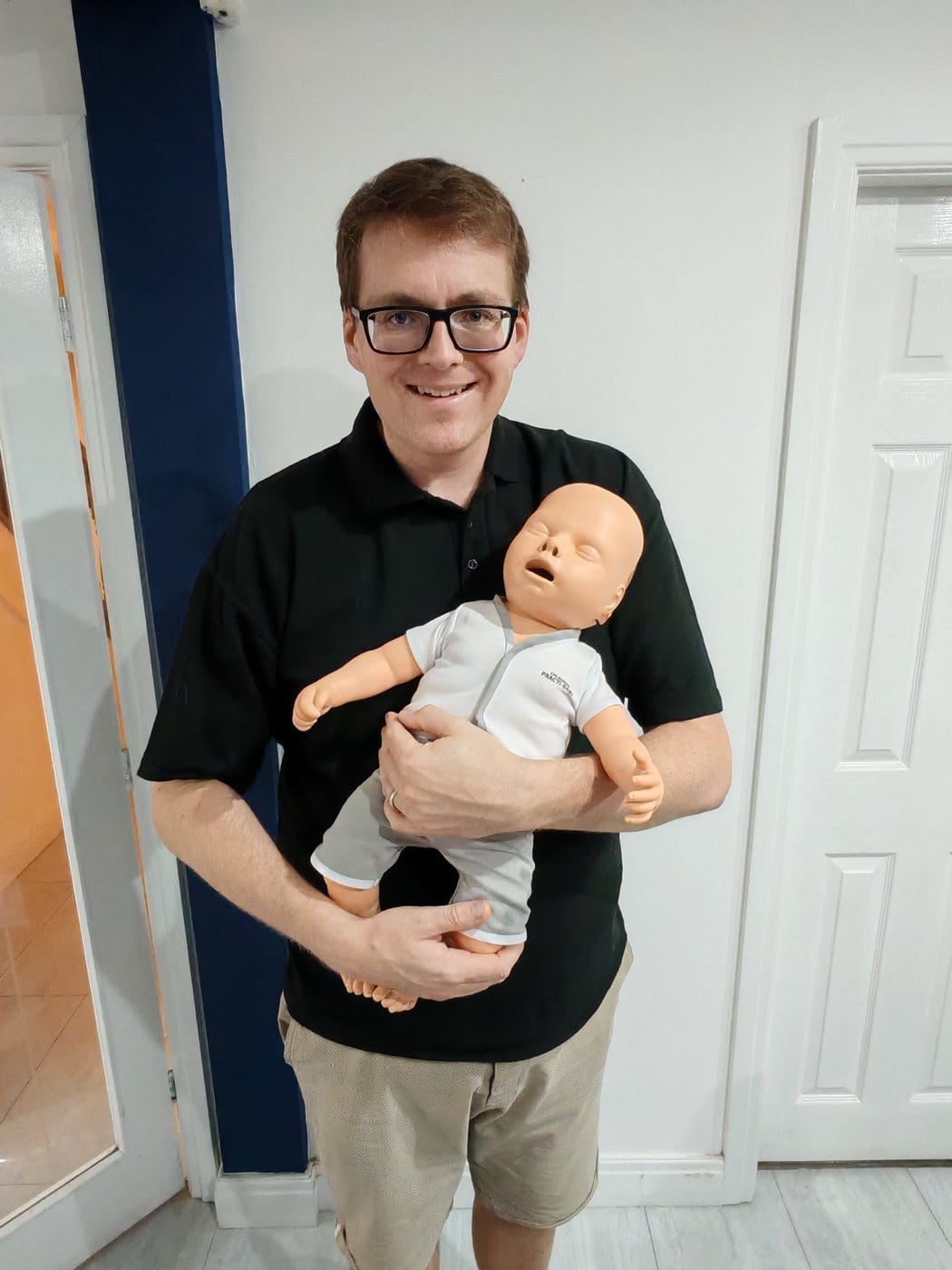
Upcoming session
Baby Emergency Essentials
Saturday 7 November 2026
10:00–12:30
Cotebrook Village Hall — Alex Timpson Room
Small-group course
View Cotebrook Village Hall on Google Maps
Stable Lane, Cotebrook, Tarporley CW6 0JJ
Choose your booking
Single place — £45
1 participant
Couple booking — £85
2 participants attending the same course
Led by Dr James Wallace, Consultant in Emergency Medicine and Advanced Life Support Instructor. A small-group, practical session with guided CPR and choking practice, an AED trainer and time for questions.
Included: a take-home guide booklet and refreshments.
Select your booking, choose the 7 November session and pay securely by card. A couple booking covers two people attending together. Your booking is confirmed after successful payment.
Booking Terms · Privacy Policy · Terms & Conditions
Date unavailable or your booking option full? Register interest in future sessions.
Practical preparation
What is Baby Emergency Essentials?
A practical baby and child first aid course that brings together emergency skills, understanding an unwell child and knowing when to seek help.
Designed around family life, the course combines clear teaching with guided, hands-on practice. You’ll explore the actions that matter in an emergency and the changes that can tell you a baby or child needs medical attention.
Calm, clinically informed first aid for parents and the people who care for their children.
Two parts. One more prepared family.
What you’ll learn
Practical infant and child first aid, with a clear approach to recognising illness and getting the right help.
Know what to do
Clear first actions when a baby or child needs urgent help.
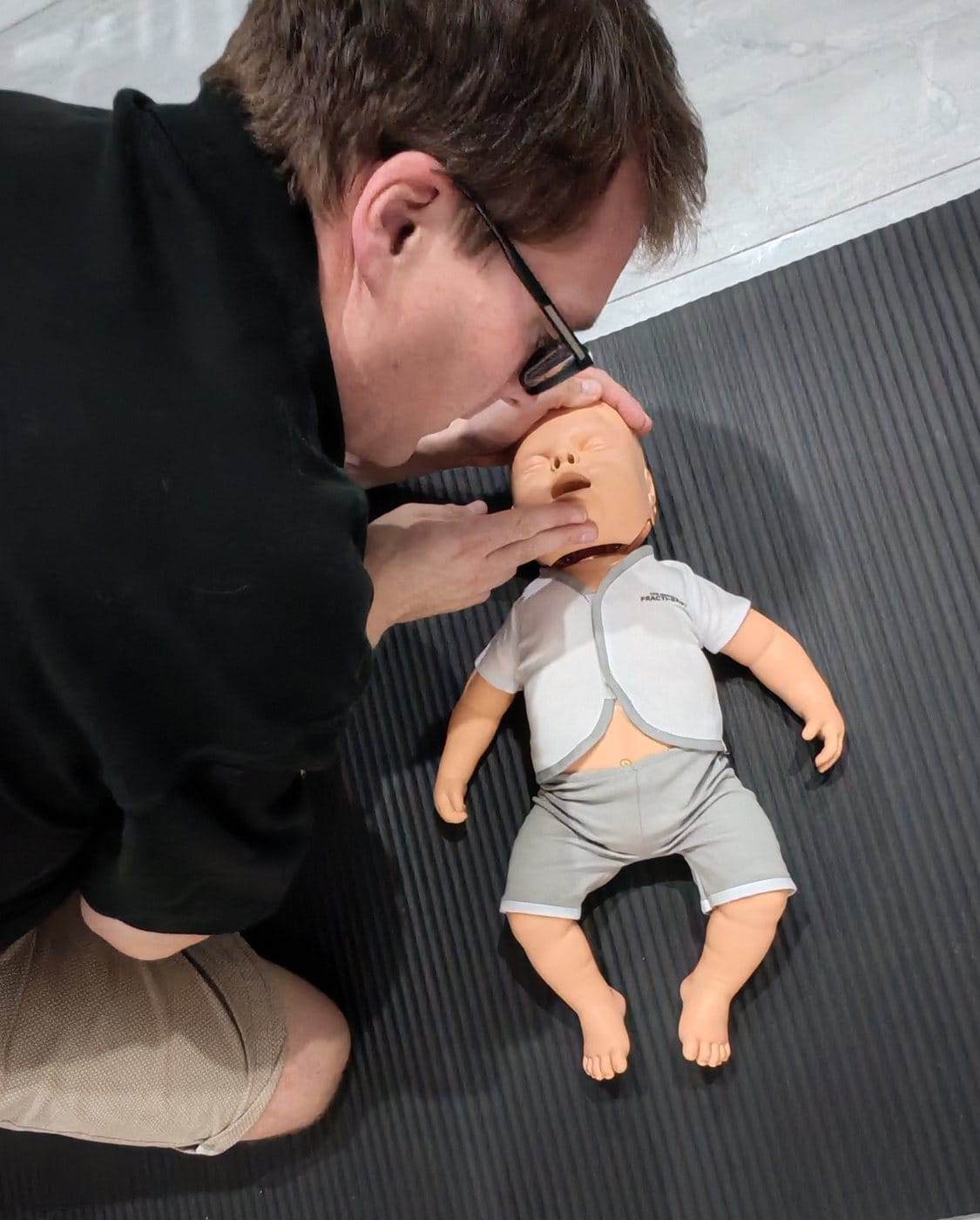
- Recognising an unresponsive baby or child and checking their breathing.
- Infant CPR and child CPR, with practical manikin-based rehearsal.
- Baby and child choking: recognising the problem and practising the response.
- Recovery positioning and keeping a breathing, unresponsive child safe while help arrives.
- Calling 999 and communicating clearly with the emergency call handler.
- First actions for serious bleeding, burns and scalds.
Know what to look for
Understanding concerning changes and when to seek medical help.
- Fever and changes in how your child looks, behaves or responds.
- Breathing difficulty, wheeze, unusual breathing sounds or increased effort.
- Reduced feeding, signs of dehydration and changes in wet nappies.
- Unusual sleepiness, persistent distress or a different, high-pitched cry.
- Seizures, including febrile convulsions, and warning signs after a head injury.
- Allergic reactions and anaphylaxis, and warning signs associated with serious infections such as meningitis and sepsis.
What should I look for? What can I do now? When should I seek medical help?
These questions guide the learning. The aim is to recognise concern, take appropriate first steps and seek help — not to diagnose illness yourself.
Everyday uncertainty
More than knowing CPR
Not every worrying moment looks like an obvious emergency. Your baby may feed less than usual. Your toddler may have a fever. Their breathing may look different, or they may seem unusually sleepy, distressed or unsettled.
Baby Emergency Essentials combines practical first aid with clinically informed recognition of an unwell child: what to notice, sensible first steps and when to ask for help.
Learn it. Practise it. Remember it.
Guided practice makes the actions more familiar.
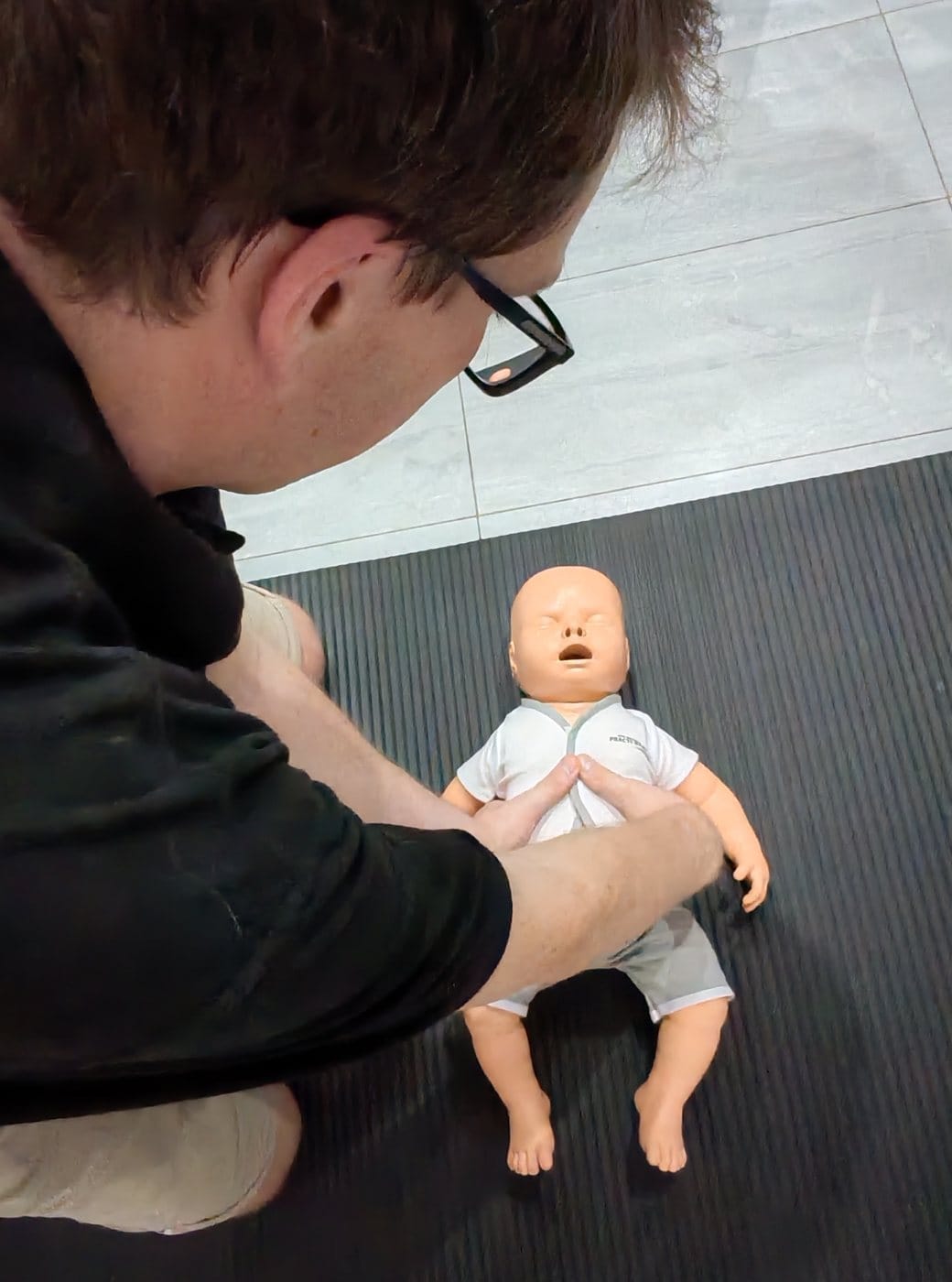
Practical learning is at the heart of the course. Clear demonstrations, appropriate training equipment and time to rehearse help turn information into familiar actions.
See it clearly
Watch the instructor demonstrate the skills and explain the purpose of each step.
Practise with support
Use training manikins to rehearse CPR and choking skills with guidance and opportunities to repeat.
Make it relevant
Ask questions and explore everyday situations involving babies, toddlers and young children.
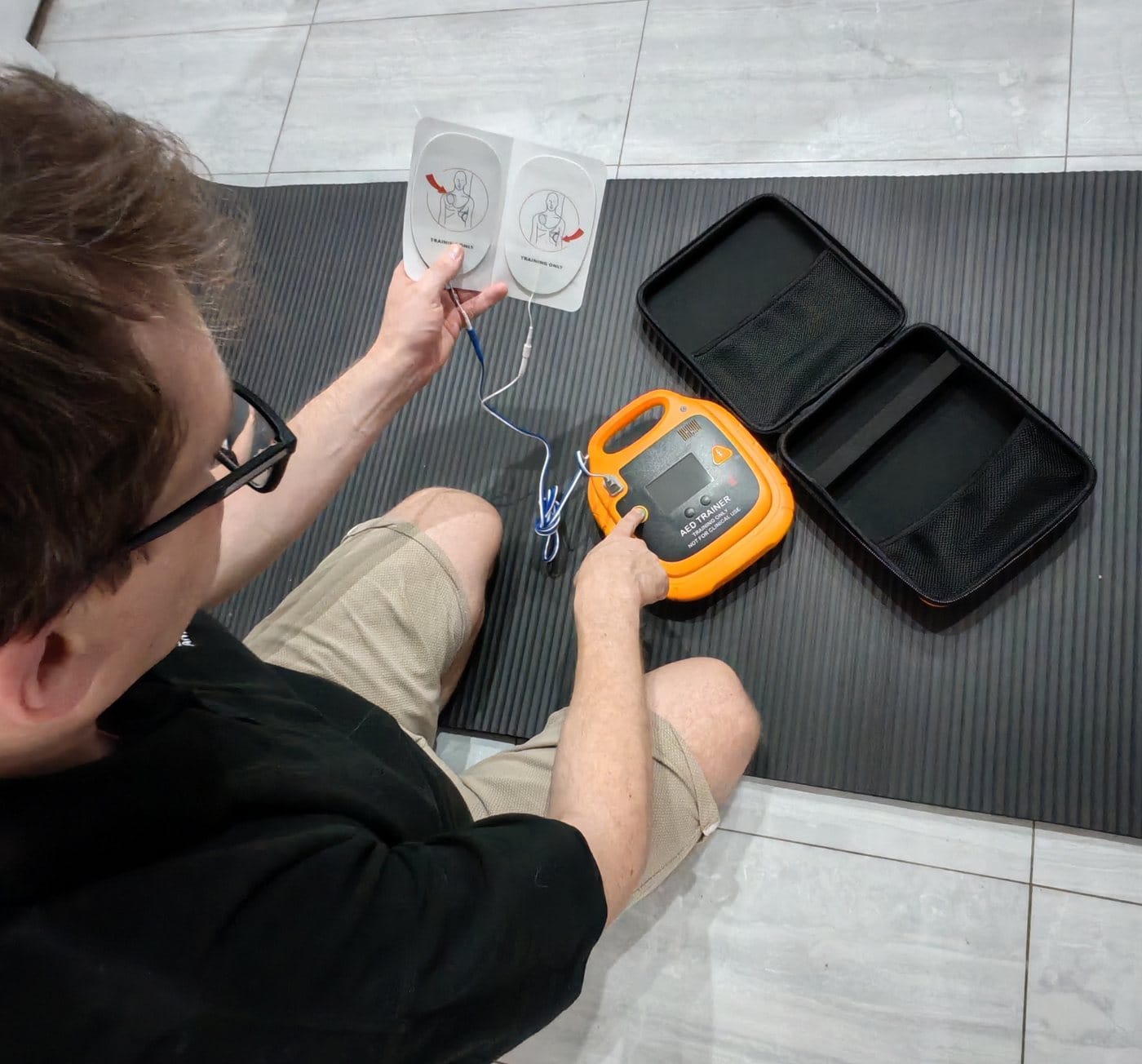
Familiarity through practice
Making emergency equipment feel familiar
Practical demonstrations offer space to become familiar with an AED trainer, its prompts and training pads, and to ask questions in a calm setting.
These photographs show James and training equipment. They are staged demonstrations, not photographs of an Oakmere customer class.
For the people who care
Baby first aid for parents, grandparents and carers
Expectant parents, new parents, parents of babies and young children, grandparents, family members and informal carers are all welcome.
Whether you’re preparing for a new arrival, starting weaning with a six-month-old or keeping up with a toddler, these skills belong in everyday family life.
You don’t need to wait until your baby arrives to learn these skills — and you haven’t missed your chance if they’re already here.
No previous first-aid or medical experience is needed.
Emergency experience translated into clear, practical guidance for families.
James is a Consultant in Emergency Medicine and Advanced Life Support Instructor, providing clinical governance and practical emergency-skills education.
Baby Emergency Essentials sits within Oakmere Life’s clinical-governance framework, bringing clinical knowledge into approachable teaching for parents and carers.
Meet James and explore our clinical governance →
About Oakmere Life →Areas we serve
Baby & child first aid for families across Cheshire, Wirral and North Wales
Baby Emergency Essentials welcomes expectant parents, new parents, parents of babies and young children, grandparents and carers from Chester and the surrounding area. Our Cotebrook session is convenient for families from Tarporley, Chester, Northwich, Frodsham and surrounding Cheshire, with practical preparation designed to feel approachable.
Families travelling from Ellesmere Port, Neston and Heswall across Wirral are welcome, as are those from Wrexham, Deeside, Mold and the wider Flintshire and North Wales area. You are equally welcome from further afield, including Oswestry and North Shropshire.
Where classes will be held
Our next face-to-face class is on Saturday 7 November 2026, 10:00–12:30, at Cotebrook Village Hall — Alex Timpson Room.
Where families may attend from
Families from all these areas are welcome to join us at Cotebrook Village Hall.
Saturday 7 November, 10:00–12:30.
Practical teaching with space for questions.
Cotebrook Village Hall — Alex Timpson Room.
Keep useful guidance close
Reliable resources for parents
These NHS resources are useful to revisit alongside practical learning, including after the course. They provide guidance on first aid and recognising when a child needs medical help.
Independent resources for families. Linking to these pages does not imply NHS endorsement of Oakmere Life.
Oakmere Guides
Useful Parent Resources
Practical reading to support your preparation.

First Aid & Emergencies · 4 min read
Baby choking or gagging? What parents need to know before weaning
Understand the difference between gagging and choking, what to look for and why practising baby first aid can help you prepare for weaning.
Read the guideBefore you join us
Your questions answered
What is included in my booking?
Your place includes the 2½-hour practical session, guided practice with training equipment, time for questions, a take-home guide booklet and refreshments. A single booking is for one attendee; a couple booking is for two attendees at the same session.
Can I bring my baby?
Please contact hello@oakmerelife.com before booking if you would like to bring your baby, so we can confirm the arrangements for this session.
What if I need an adjustment for practical learning?
Please contact hello@oakmerelife.com before booking to discuss access or practical learning needs. We can discuss the session and what arrangements are possible without asking for a detailed medical history.
What if I need to cancel or change my booking?
Please read our Booking Terms before paying for the cancellation and transfer arrangements. If your plans change, contact hello@oakmerelife.com. Read Booking Terms.
What if my booking option is full?
If the 7 November session is unavailable for your booking option, register interest through our contact page for future dates. A couple reservation covers two attendees; one calendar slot means one couple booking.
When should I take a baby first aid course?
You can learn before your baby arrives or at any stage while caring for a baby, toddler or young child. There is no need to wait for a particular milestone.
Can I attend while pregnant?
Yes. Expectant parents and birth partners are welcome. Learning ahead of your baby’s arrival can help you feel more prepared for the months that follow.
Can I attend if my baby is already born?
Absolutely. The course is relevant whether your baby is six months old, your child has just turned one or you are caring for a toddler or young child.
Can grandparents attend?
Yes. Grandparents, family members and informal carers are welcome. The course is designed for the people who care for babies and young children.
Do I need previous first-aid experience?
No. Clear demonstrations and guided practice introduce the skills step by step. You do not need a medical background.
Will I practise baby CPR and choking skills?
Yes. Practical rehearsal of infant and child CPR and baby and child choking responses is central to the course, using suitable training manikins and equipment with instructor guidance.
Will the course cover fever?
The course includes recognising concerning features in a child with fever, sensible first steps and when to seek medical help. It is about recognising illness and getting help, rather than diagnosing the cause.
Will I learn to recognise breathing difficulty?
The course includes recognising changes in breathing, such as increased effort or unusual sounds, and understanding when medical help is needed. You will not be expected to diagnose the cause.
Is this the same as a workplace paediatric first-aid qualification?
No. Baby Emergency Essentials is practical education for parents, grandparents and carers. It is not a regulated workplace paediatric first-aid qualification and should not be used as a substitute for training required by an employer or childcare setting.
Preparing for a new arrival?
Support before birth, skills for what follows.
Explore calm, practical pregnancy and birth preparation with Oakmere Beginnings. Baby Emergency Essentials is a standalone course, suitable before or after your baby arrives.
Explore hypnobirthing →Upcoming Baby Emergency Essentials classes
Feel more prepared for the moments you hope never happen.
Practical baby and child first aid in Cheshire for parents, grandparents and carers.
Saturday 7 November 202610:00–12:30 · Cotebrook Village Hall
Alex Timpson Room · Small-group course.
Single place £45 — one participant.
Couple booking £85 — two participants.
Choose your booking and pay securely online.
Book your placeBooking terms · Privacy policy
View all upcoming Oakmere sessions →
Have a question? Contact us or email hello@oakmerelife.com.